Relationship Between Knowledge and Compliance With Safety Measures: Evidence From COVID-19
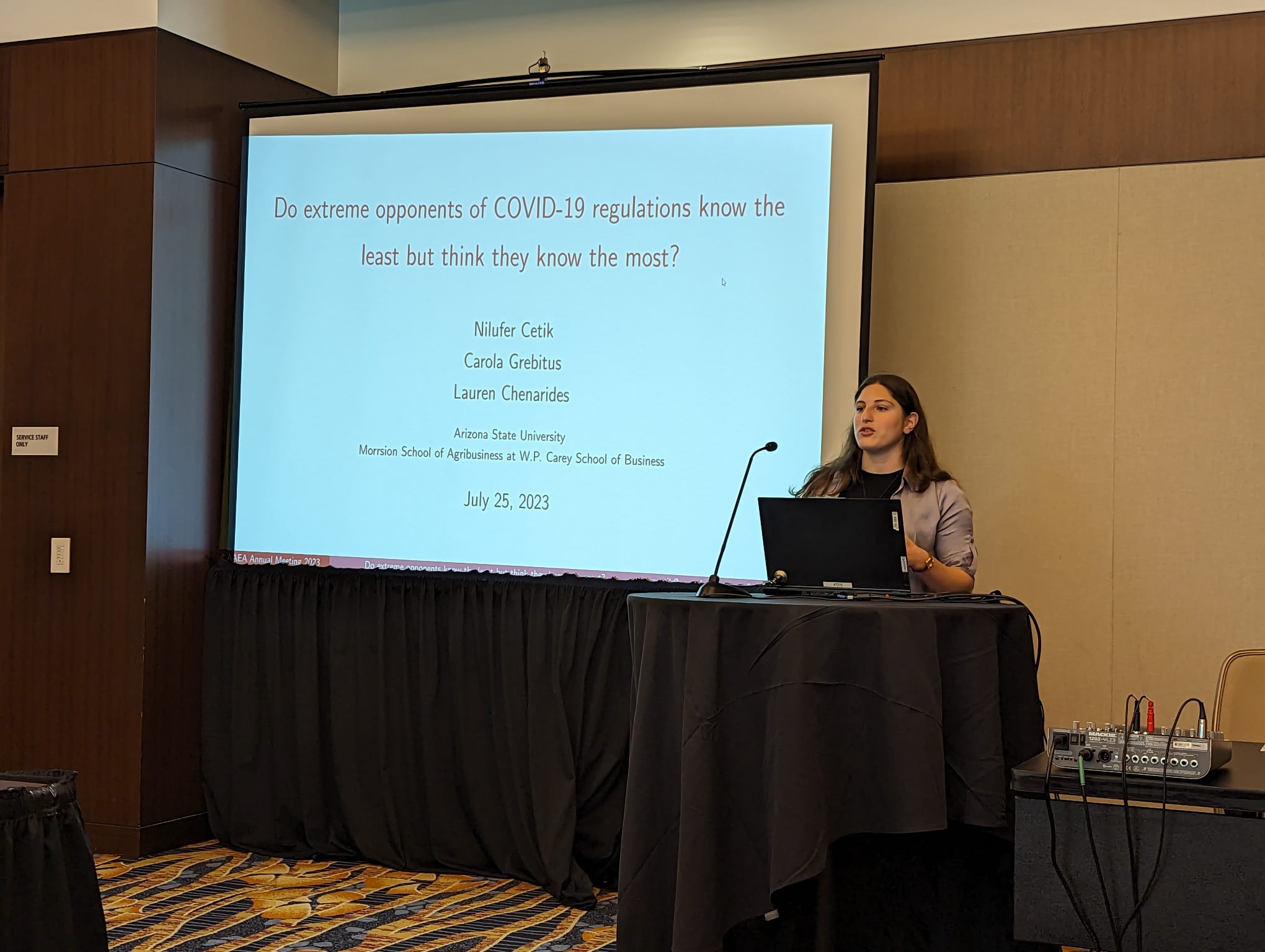
Cetik, N., C. Grebitus, and L. Chenarides. 2025. “ Relationship Between Knowledge and Compliance With Safety Measures: Evidence From COVID-19.” Applied Economic Perspectives and Policy 1–18. https://doi.org/10.1002/aepp.70031.
Abstract: Compliance with health safety protocols is important for protecting public health, particularly in agricultural sectors where disease outbreaks can disrupt production and market access. Despite its economic significance, we know little about what drives protocol compliance. We examine the relationship between individuals’ objective and self-assessed knowledge and their compliance with safety measures in the context of COVID-19. We find that greater opposition to COVID-19 safety protocols is associated with lower objective knowledge and inflated self-assessed knowledge, indicating overconfidence. Addressing cognitive biases could make public health interventions more effective with important implications for agricultural settings where resilience depends on consistent protocol adherence.


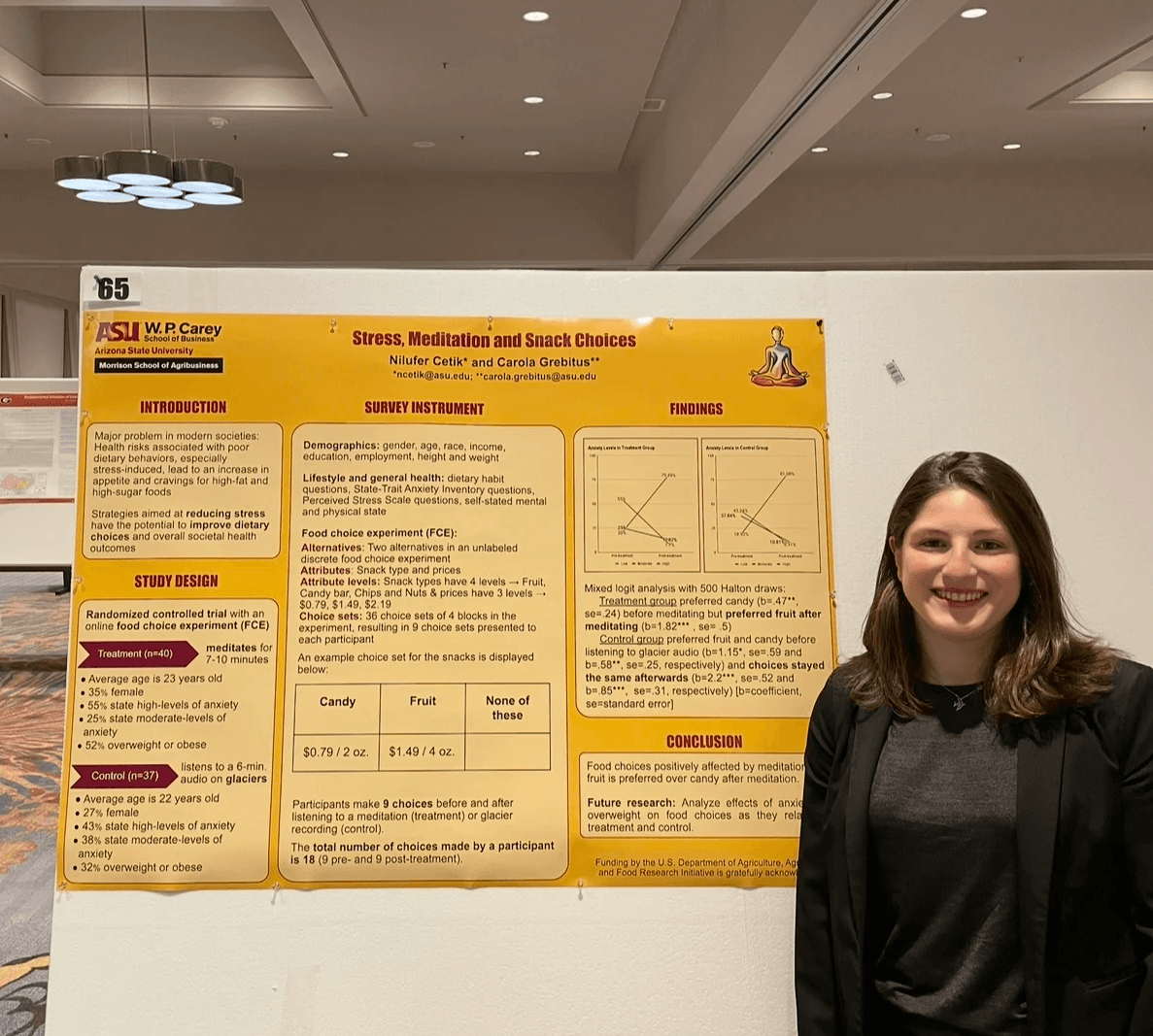
Managing Stress to Promote Healthy Diets: Evidence From A Randomized Controlled Trial
with Carola Grebitus, and Donna Martens
Abstract: Decision-making is integral to daily life, yet stress alters cognitive processing and impairs optimal choices, including dietary decisions. Such impairments contribute to maladaptive outcomes like malnutrition and obesity. This study employs a four-week, three-arm randomized controlled trial with 168 participants to test whether meditation reduces perceived stress and cortisol levels, thereby supporting healthier food choices. Dietary preferences are measured through a discrete choice experiment and evaluated using established econometric methods. Findings are expected to provide evidence on alleviating stress-impaired decision-making in food consumption, with implications for individuals at risk of malnutrition and for broader public health initiatives.
Stress and (Un)Healthy Food Consumption: A Randomized Controlled Trial
with Carola Grebitus, and Larissa Drescher
Abstract: This research investigates how stress-induced cortisol influences dietary consumption patterns, focusing on the amount of foods consumed and the nutritional balance of the diet. Chronic stress impairs decision-making and can drive overeating, compounding the health and economic costs associated with obesity and malnutrition. Using the validated Healthy Food Diversity Index constructed from Food Frequency Questionnaires, the study evaluates how perceived stress and cortisol concentrations affect overall dietary diversity and proportional intake. It further tests meditation as an intervention, hypothesizing that stress reduction leads to lower cortisol levels and healthier consumption patterns. Results will provide insights for policies and strategies aimed at improving nutrition, with relevance across behavioral economics, psychology, marketing, and public health.
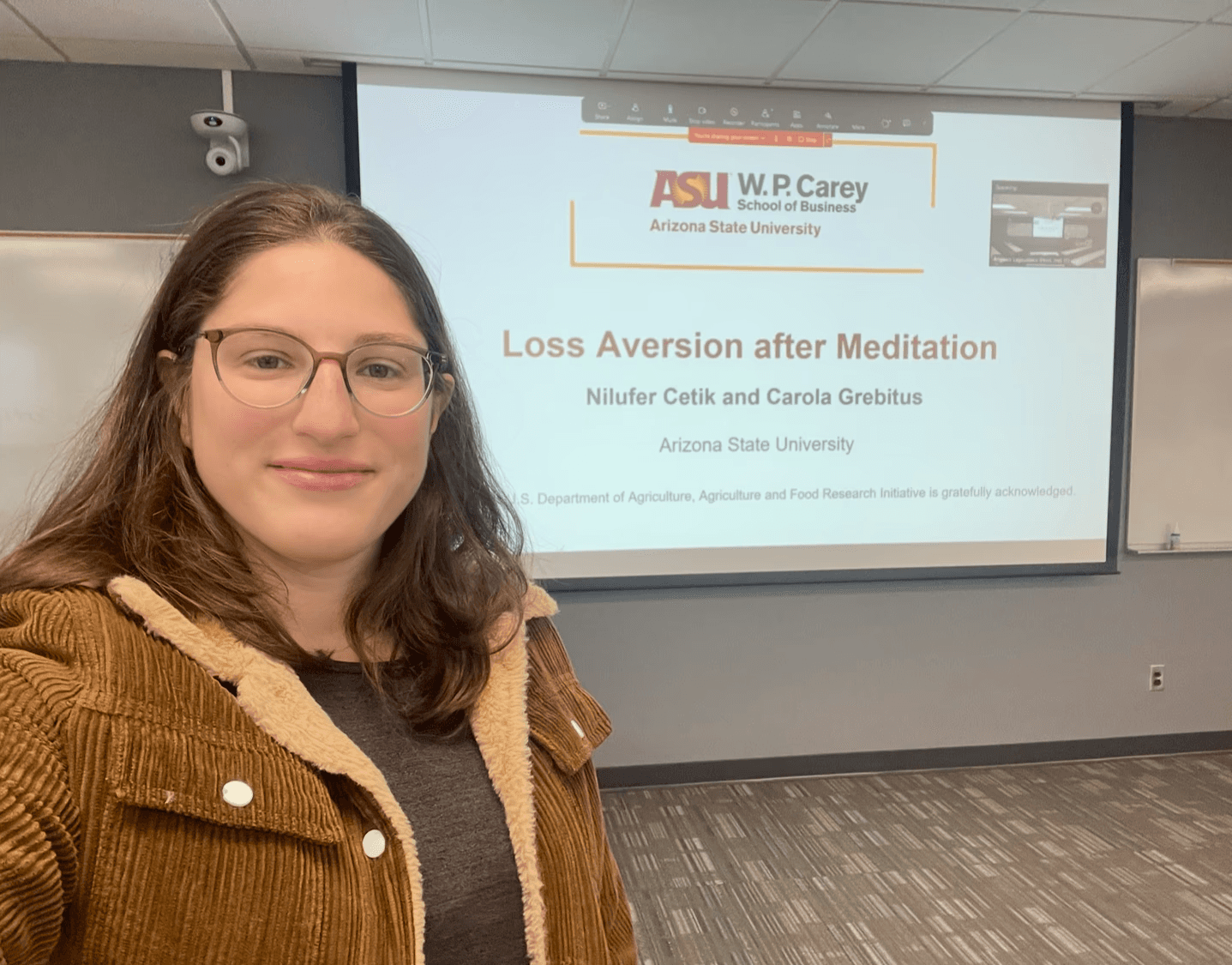
A Prospect Theory Approach: Decision-Making Under Stress And Loss Aversion
with Carola Grebitus